
At this point, it is almost traditional that we send out our end-of-summer update well into winter. Ah well!
Psy-Care Aotearoa keeps growing and improving, with more and more collaboration with other harm reduction rōpu and practitioners; read on to hear about Ashlyn’s trip to Tāmaki Makaurau, to kōrero all things Psychedelic-Assisted Therapy. We’ve added a fifth coordinator to our team – stoked to have you, Kiwa! We’ll introduce them below as well. We’ve had cameo spots supporting the harm reduction kaupapa at other events, and on other care teams (shoutout to E Tū, Dunedin Winter Solstice Safe Zone, and the Pōneke Party Guardians). We’re still chipping away at achieving Charitable Trust status; although it took a back seat over our busy summer season, we’ve taken advantage of the quieter months to get our application finished and sent away. At the core of our mahi, of course, was runnning the Psy-Care space at six events over the last season – here’s the season in numbers:
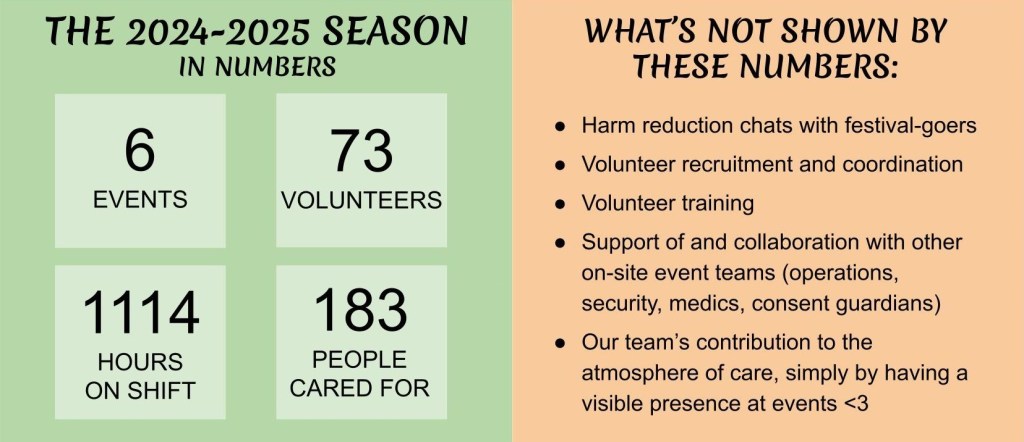
What’s really exciting is that we’re seeing proportionally less folks requiring our care at some of our regular events. While we can’t say for sure without more research than we have the capacity for, what this suggests to us is that less people are finding themselves in distress, and/or more people have the skills to look after each other out in the party. Harm reduction! It’s working!
INTRODUCING OUR NEWEST COORDINATOR
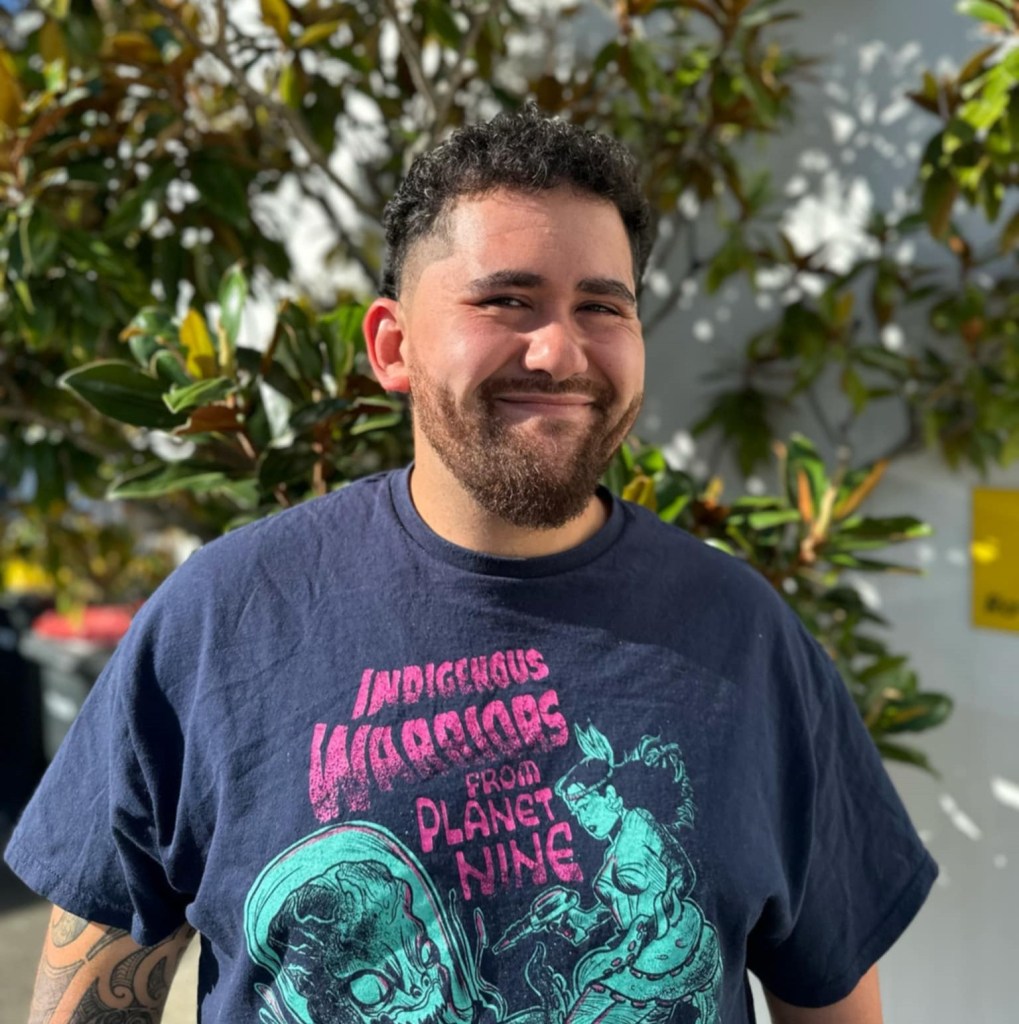
Kiwa Kahukura Denton He/They
He uri tēnei nō Ngāti Rārua, Te Ātiawa, me Ngāti Kahungunu. Nō Motueka ahau, engari kei Ōtautahi tōku kāinga ināianei.
Kiwa connected with Psy-Care at Twisted Frequency in 2021, striking up a chat with Charlie while supporting a friend. They started volunteering with Psy-Care at the following Twisted Frequency and continued for a few years before expanding to the wider festival circuit as Psy-Care’s first 2iC during the ’24/’25 season.
Kiwa holds a Diploma of Youth Work (Distinction) and has recently completed a Bachelor of Youth and Community Leadership alongside a Certificate of Arts in Māori and Indigenous Studies. He brings almost a decade of youth and community development experience and a passion for looking after people in need. This is grounded by his belief that fun is an essential part of living a good life, and that everyone deserves to have fun safely and happily.
For mahi, Kiwa spends his time supporting rangatahi takatāpui (Rainbow & Māori young people) as well as facilitating Rainbow competency and respectful relationships workshops. In his spare time, he enjoys sports, nerdy stuff, and squeezing in a kanikani as often as possible.
SNAPS FROM THE SEASON
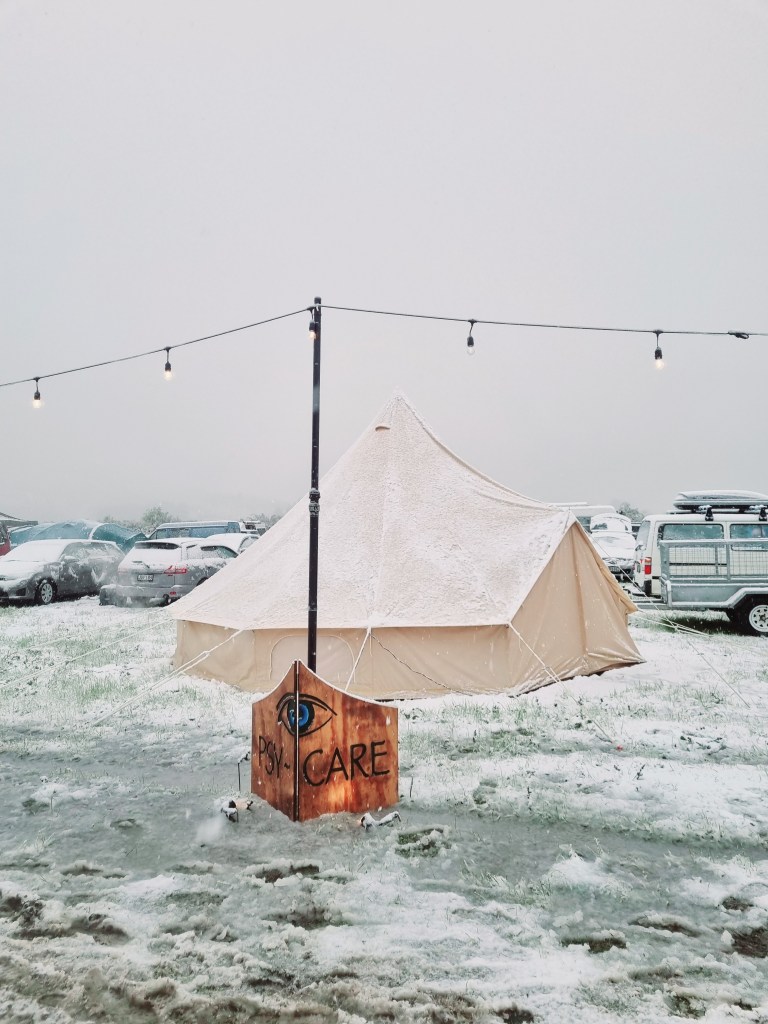
Running Psy-Care at events ranges from the routine to the absolutely unpredictable. Here’s a couple of contrasting moments captured this season:

PSYCHEDELIC-ASSISTED THERAPY HUI IN TĀMAKI MAKAURAU
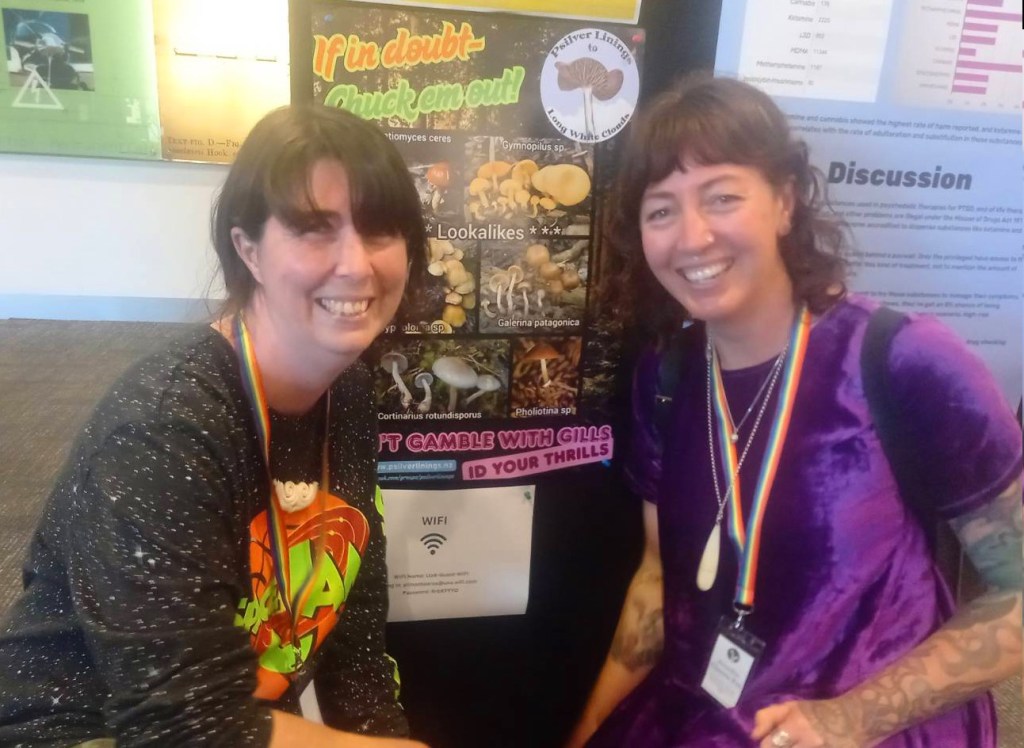
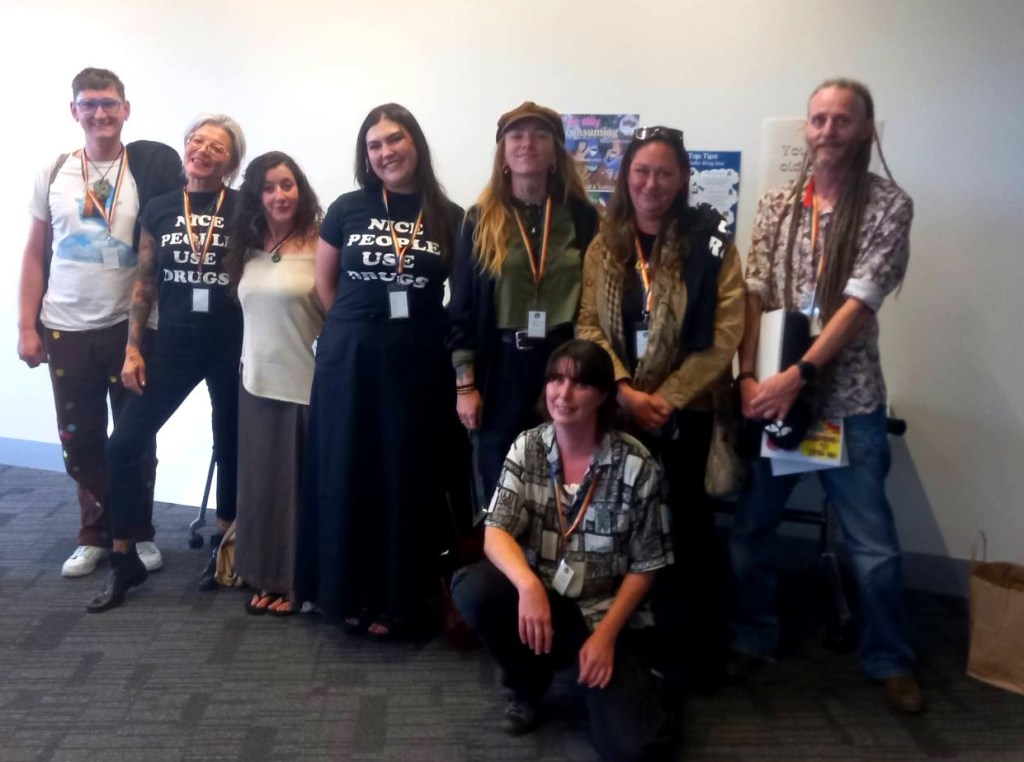
Our coordinator Ashlyn recently attended a community strategising hui in Tāmaki Makaurau on Psychedelic-Assisted Therapy in Aotearoa, as a representative for Psy-Care Aotearoa. Thanks to generous donations, we were able to cover travel and accomodation for Ashlyn, and the other two leads for Fest-Aid and Ngā Kaitiaki – Festival Guardians to represent the underground EDM community and the valuable knowledge we hold in relation to harm reduction in this area.
This hui was a wonderful chance to network with like-minded professionals invested in harm reduction. We have made some awesome connections in the research world, other harm reduction organisations, other practitioners who may benefit from volunteering with us and a new world of funders. This has brought about some exciting opportunities for Psy-Care such as having a hand in creating an online harm reduction course and starting to look at doing training for the general public in harm reduction practice, alongside some of our sister organisations.
The exciting energy at the hui was palpable with us realising now is the time that the knowledge we have been gathering for a decade can be of use in the professional world. It was amazing to have our knowledge not only respected, but our lived experience prioritised, with Ashlyn being asked to speak on a panel. This is being echoed in a recent documentary released called ‘Mind Menders’ which explores the current research being done in Psychedelic-assisted therapy in Aotearoa. “Now is the time”.
The most moving part of the hui was the centralisation of Matauranga Māori and the example that was set by the main facilitators Tehseen and Jo’rel who worked in partnership with each other to show us what was possible when partnership is done with tikanga. We will be carrying these lessons with us as we progress. Mauri Ora.
You can check out videos and resources from the hui here, including Jai Whelan’s keynote address on the place of harm reduction in the wider psychedelic-assisted therapy kaupapa.
HARM REDUCTION TIP – MEDICATIONS ARE ALSO DRUGS
Information on interactions between prescription medications and illicit drugs is difficult to find. Here’s a couple of examples we think are worth highlighting:
Antidepressants and MDMA/Stimulants
Taking MDMA while on antidepressants should only be done with caution, planning, and prior research.
If you’re taking SSRIs, there’s a good chance the felt effects of MDMA or other stimulants will be considerably dulled, so this might be an underwhelming experience. Trying to compensate for this by re-dosing, or taking a larger initial dose, is risky, and generally a bad idea; as it can have some unpleasant physical effects, and in a worst case scenario, can cause seretonin syndrome, a serious, and potentially fatal condition.
SNRI’s and other types of antidepressants have slightly different interactions, but similar, and sometimes greater risks if mixed with MDMA or other Stimulants.
Pregabalin and ketamine
Mixing central nervous system depressants like ketamine with pregabalin or other GABAergic medications (used for nerve pain or seizures, among other things) carries some big risks, especially if you are also drinking alcohol. Mixing will increase the duration and effects of both substances, most notably confusion, drowsiness, and lack of coordination and in more severe cases, can cause unconsciousness, respiratory depression, and can be fatal.
Lithium and cocaine
Lithium (and some other mood stabilisers or antipsychotics) will counteract cocaine, decreasing it’s effects. Cocaine also dehydrates you, and can cause an imbalance of electrolytes, which increases the risk of lithium toxicity; and together they put a lot of strain on the heart, increasing the risk of a heart attack or other cardiovascular event. Overall, not a good combo!
A not-so-quick DuckDuckGo search for an interaction guide found no easily-accessed comprehensive info, but did turn up:
This great article from The Level, published in 2024, with some general guidelines for mixing psychiatric medications and illicit drugs, and a few specific interactions.
This resource kit of pamphlets on the most common party drug types and their interactions with medications, updated in 2024, from the Queensland Network of Alcohol and Other Drug Agencies (QNADA). It describes more general categories (e.g. stimulants, or hallucinogens) rather than specific substances.
The best thing we can recommend is proceeding with caution, alongside a thorough search engine session on the specific combination you are contemplating, or talking to your doctor (who will keep your drug use confidential, but might not necessarily know much about illicit drugs  )
)
IN CASE YOU MISSED IT:
Last year we worked alongside other harm reduction and care space practitioners from around Aotearoa to put together the Event Care Spaces website, providing practical guidance on setting up and running your own care space. Check it out, if you haven’t already! We’re extremely proud of this project 🙂
As always, thanks for reading and more generally for supporting the Psy-Care Aotearoa mahi. We’ll see you out there,
Ngā mihi,
Clare (and Charlie, Kiwa, Penny and Ashlyn)
 Psy-Care Aotearoa
Leave a comment